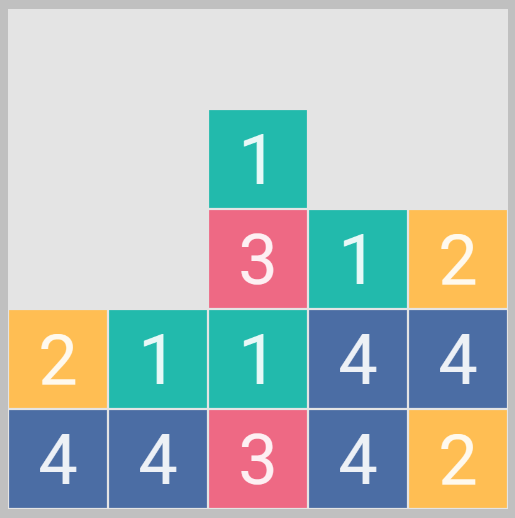
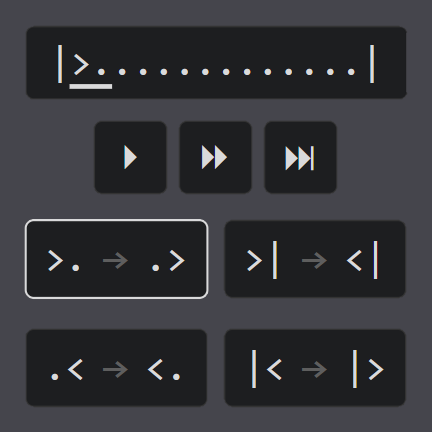
A string rewriting system is a simple model of computation. A program is defined by a list of rules of the form s → t, indicating that the substring s should be replaced by the string t. Here is a program that uses 3 rules to sort a string of a’s and b’s and c’s: Reset Open in editor ↗ Note that the program always applies the first applicable rule in the first position possible. ...
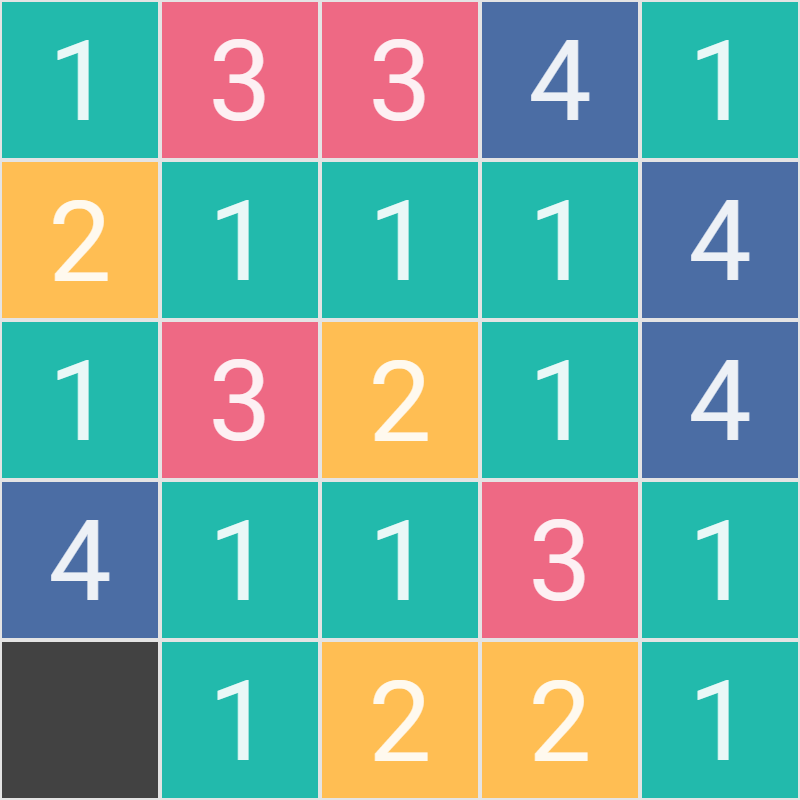
Collapse is a game I made based on the Android game Just Get 10. The core mechanic is the same: collapse chains of tiles to create tiles with higher value. In “Just Get 10”, the main goal is to create a tile with the value 10 (and then you can go even further if you like, though each successive value takes twice as long to reach: my record was 15). In “Collapse”, there is a hard cap on the value of tile you can create, and you must try to score as many points as possible before the board fills up with dead tiles. ...
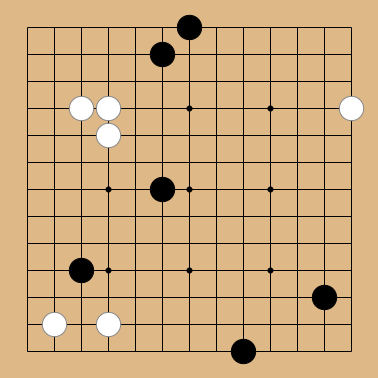
This is a tool I made to generate random positions that are balanced according to KataGo: For more information, see this forum thread.
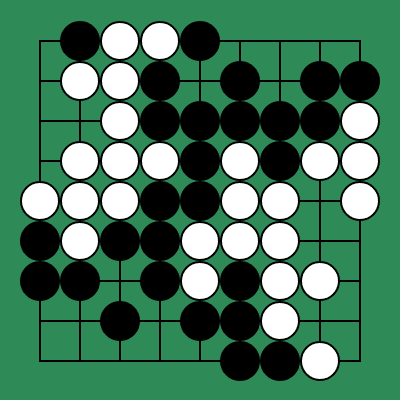
A game I made to practice counting go boards: Try it out here! For more information, see the about page and this forum thread.
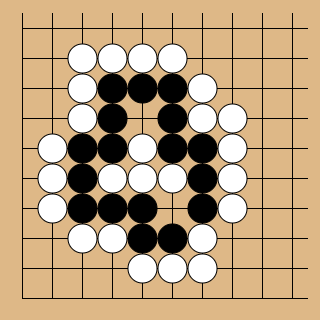
In tsumego practice, we usually know from the setup that there is a way to live/kill for the side to move. But in real games, we don’t just have to find a working move, we have to determine whether it’s necessary to add a move at all. The status game is a tool I made to practice this skill. Try it out here! For more information, see How to play? and this forum thread.
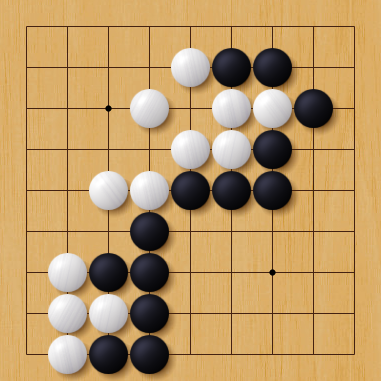
This is a position from a game I played on GoQuest: My opponent just connected at D1. How should I continue? If I play the reverse sente at C4, my opponent gets the reverse sente at F9, and the result is a draw (GoQuest uses Chinese rules with 7.0 komi). If I try to play the sente at F9, my opponent will ignore and counter with the sente at C4. Black’s follow-up is bigger than mine so I have to respond at B4. The result is again a draw. ...